Introduction
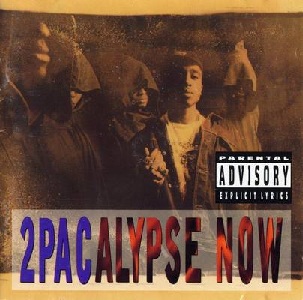
There are debut albums, and then there is 2Pacalypse Now. Released on November 12, 1991 through Interscope and Jive Records, Tupac Shakur's first full-length project did not arrive with the polish of a major label package or the accessible hooks of a radio-ready rollout. It arrived like a warning. Raw, political, furious, and at times uncomfortably honest, it introduced a 20-year-old from East Harlem — raised in Baltimore and shaped by Oakland — who had something urgent to say and absolutely no patience for sugarcoating it. This was not an album designed to make you feel comfortable. It was designed to make you pay attention.
Contents
Album Background
Track Highlights
The Dan Quayle Controversy
Production and Sound
Legacy
Verdict
FAQs
Album Background
Tupac Amaru Shakur had been building a name as a roadie and backup dancer for Digital Underground when he stepped forward as a solo artist. His mother, Afeni Shakur, was a Black Panther activist who had been incarcerated while pregnant with him. His godfather was Geronimo Pratt, another Black Panther. His childhood was one of poverty, movement, and political consciousness long before he ever touched a microphone. All of that pours directly into 2Pacalypse Now, an album that feels less like an entertainment product and more like a document of a young Black man in America processing everything the country had put him through. The album was recorded against a backdrop of deep civil unrest. The Rodney King beating had just occurred, crack cocaine had devastated communities across America, and police brutality was a lived reality rather than a hashtag. Tupac was 20 years old when this came out. He wrote it like someone who had run out of patience.
Track Highlights
The album opens with Young Black Male, a thesis statement about identity and survival that sets the tone for everything to come. Trapped follows and is arguably the most fully realised track on the record — a suffocating portrait of systemic imprisonment that goes far beyond the literal. It is one of the best songs Tupac ever made. Soulja's Story is deliberately provocative, told from the perspective of a young man driven to crime by circumstance, and it became the focal point of the political controversy that followed the album's release. Brenda's Got a Baby stands apart from everything else here. Where most of the album operates at a temperature of barely controlled rage, this one is pure sorrow. It tells the story of a 12-year-old girl abandoned by her family, exploited, and ultimately broken by a system that offered her nothing. It is storytelling at its most devastating, and it remains one of rap music's great social portraits. The contrast between its quiet ache and the anger elsewhere is what makes this album feel like a complete human being, not a performer playing a single note.
The Dan Quayle Controversy
In 1992, a teenager in Texas shot a state trooper and was found to have been listening to 2Pacalypse Now shortly before. US Vice President Dan Quayle seized on the incident and publicly called for the album to be pulled, stating it had no place in American society. The controversy drew national attention to both the record and to Tupac, who at that point was not yet a household name. Rather than damage him, the backlash amplified his message and cemented the album's cultural relevance. Interscope stood behind the release. Quayle's intervention was an early preview of the culture war battles over rap music that would define the decade — and Tupac was already right at the centre of it.
Production and Sound
The production, handled primarily by the Digital Underground's Underground Railroad crew, is deliberately stripped-back West Coast hip-hop: hard drum loops, bass-heavy grooves, sparse samples from funk and soul. Some of it has not aged as gracefully as the writing, but that rawness is also part of the album's identity. This was not a big-budget studio affair. It sounds like it was made by people with something to prove and limited time to prove it — which matches the urgency of the content perfectly. The lack of sonic gloss forces all the weight onto Tupac's voice, and his delivery — intense, precise, emotionally intelligent at 20 years old — carries it without strain.
Legacy
2Pacalypse Now moved around 500,000 copies at the time, a solid but unspectacular number. Its stature grew enormously in hindsight as the full scope of Tupac's career became clear. Today it sits alongside Public Enemy and Boogie Down Productions records as one of the most politically serious hip-hop albums of the early 1990s. It proved from the very first release that Tupac was not interested in entertainment for its own sake. He wanted to hold a mirror up to an America that preferred to look away. Every rapper who has since used hip-hop as a vehicle for social critique owes something to what Tupac was already doing here in 1991.
Verdict
2Pacalypse Now is a rough diamond. The production is uneven and some tracks feel like sketches. But the best moments — Trapped, Brenda's Got a Baby, Soulja's Story — are as powerful as anything in hip-hop's first three decades. More than the individual songs, though, the album introduced a voice that was unlike anyone else in the game: urgent, empathetic, furious, and incapable of faking anything. As a debut, it is one of the most important records in rap history — not because of its commercial impact but because of what it said, who it said it for, and the courage it took to say it.
Rating: 8.5 / 10
FAQs
When was 2Pacalypse Now released?
November 12, 1991, through Interscope and Jive Records. It was Tupac Shakur's debut studio album, released when he was 20 years old.
Why did Dan Quayle criticise the album?
In 1992, US Vice President Dan Quayle publicly condemned 2Pacalypse Now after a teenager who shot a state trooper was reportedly listening to the album. Quayle called for it to be pulled, arguing it had no redeeming value. The controversy backfired and amplified Tupac's profile significantly.
What are the best songs on 2Pacalypse Now?
Trapped and Brenda's Got a Baby are widely considered the standout tracks. Trapped is a masterclass in depicting systemic oppression through personal narrative, while Brenda's Got a Baby showcases Tupac's extraordinary gift for empathetic storytelling. Both remain essential listens from his entire catalogue.