Introduction
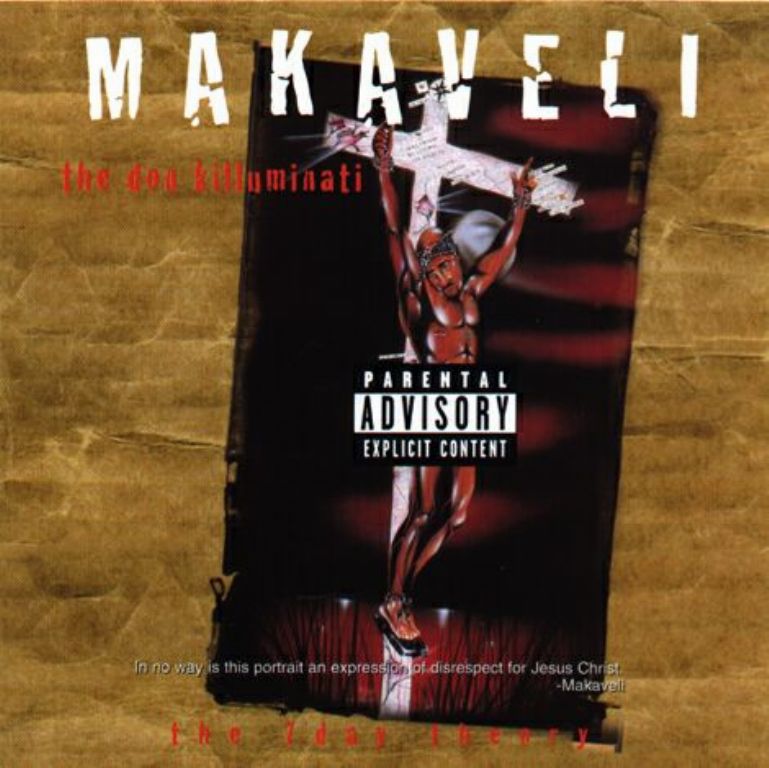
The Don Killuminati: The 7 Day Theory is the album Tupac made in the last weeks of his life and which the world received after he was gone. Released on November 5, 1996 — a full seven weeks after his death from gunshot wounds sustained in Las Vegas on September 7 — it was recorded in just seven days in August 1996, a month before he was shot, and released under the alias Makaveli. The album cover shows Tupac crucified, a figure whose image had been appropriated as a symbol of both martyrdom and prophecy. It is the angriest, most focused, most haunting record of his career, and for many fans and critics, it is the one that comes closest to capturing who Tupac really was when the cameras stopped rolling and the party guests went home.
Contents
Seven Days: The Creation of the Album
Machiavelli, the Alias, and the Mythology
Track Highlights
Production
Legacy
Verdict
FAQs
Seven Days: The Creation of the Album
In the first week of August 1996, Tupac walked into a Los Angeles recording studio and worked with near-demonic intensity. He wrote all the lyrics in three days. Mixing took four more. The entire project was complete in a week. He had been reading Niccolò Machiavelli's The Prince during his prison sentence and had drawn from it not a political manifesto but a philosophy of psychological warfare — the idea that you can project strength and invincibility as a deliberate strategic act, that the enemy's fear of you is itself a weapon. The alias Makaveli, the concept of faking your own death to confuse enemies, the imagery of crucifixion on the cover — all of it was calculated, consciously mythologized. What he could not have calculated was that the album would arrive as a genuine posthumous document.
Machiavelli, the Alias, and the Mythology
The decision to release under the Makaveli alias rather than his own name was not simply a marketing exercise. It represented a genuine philosophical reinvention. Tupac was not trying to distance himself from his past; he was trying to weaponize the idea of reinvention itself. Machiavelli had argued that a prince must know how to make himself feared while avoiding hatred, how to project power even when vulnerable, how to control his own narrative. Tupac had been doing versions of this his entire career — the Makaveli project made it explicit. The mythology that grew around the album after his death — the numerology, the theories about staged death, the idea that the 7 Day Theory was a prophecy — is largely the result of an audience receiving an intentionally cryptic work through the lens of genuine tragedy.
Track Highlights
Hail Mary is the album's centrepiece and one of the most chilling records in rap history. It opens with a haunting piano line and proceeds into a meditation on violence, death, and damnation that sounds like a man dictating terms from beyond the grave. The delivery is stripped of everything except menace and grief. To Live and Die in L.A. is a striking tonal contrast — a warm, genuinely beautiful West Coast tribute that serves almost as a love letter to the city. Me and My Girlfriend, reworked and interpolated years later by Jay-Z and Beyoncé, is a clever extended metaphor treating his relationship with a firearm as a love story; it is playful and grim in equal measure. Against All Odds is one of his most explicit records, naming names from his real life and addressing the people he blamed for his shooting and his legal troubles with cold, specific fury. Blasphemy is a rare theological meditation, Tupac wrestling with faith and mortality in ways that feel utterly unguarded. Krazy closes the album on a note of paranoid isolation. Every track serves the same overarching mood: a man who knows something is wrong and cannot stop himself moving toward it.
Production
The production, handled primarily by QDIII alongside a small team of Death Row affiliates, is deliberately darker and more minimal than All Eyez on Me. The G-funk polish is dialled back in favour of harder, more ominous beats. Where All Eyez felt like a party that got out of hand, Killuminati feels like the aftermath. The production choices were made quickly — the whole record was mixed in four days — but the urgency works in the album's favour. The rougher edges give it an immediacy that the more polished Death Row sound sometimes lacks. This is an album that sounds like it was made by someone who did not have time to waste.
Legacy
The Don Killuminati debuted at number one on the Billboard 200 in its first week despite — or because of — Tupac's death. It has sold over four million copies in the United States alone and is certified quadruple platinum. J. Cole has named it his favourite album of all time, saying it gets better for him the older he gets. Kendrick Lamar, 50 Cent, and dozens of others have cited it as a defining influence. More than any other Tupac record, it is the one that feels prophetic in hindsight — not because of conspiracy theories about his death but because the emotional content is so explicitly a reckoning with mortality that it reads, unavoidably, as a goodbye.
Verdict
The Don Killuminati: The 7 Day Theory is Tupac's most mythologised album and, depending on your mood, possibly his best. It lacks the emotional sweep of Me Against the World and the commercial euphoria of All Eyez on Me, but it has something neither of those records has: a totality of vision. Every song is feeding the same fire. It is the most cohesive, most focused, most intentional thing he ever made. Recorded in a week and listened to across a lifetime, it remains one of the most extraordinary documents in the history of popular music. It sounds like the last thing someone says before the door closes.
Rating: 10 / 10
FAQs
Why did Tupac use the name Makaveli?
Tupac read Niccolò Machiavelli's The Prince while imprisoned at Rikers Island and was drawn to its philosophy of strategic deception and projected power. He adopted the alias Makaveli as a deliberate act of reinvention, taking ownership of Machiavellian ideas about controlling your own narrative and weaponising your enemy's fear.
Was The Don Killuminati recorded before or after Tupac died?
The album was recorded entirely before Tupac's death. He wrote all the lyrics in three days and the mixing took four more, all in early August 1996. He was shot on September 7, 1996 and died six days later. Death Row released the album on November 5, 1996 — seven weeks after his death.
Is The Don Killuminati Tupac's best album?
Many fans and critics consider it so, particularly for its focus and cohesion. J. Cole has named it his favourite album of all time. Others prefer Me Against the World for its emotional depth or All Eyez on Me for its scale. All three make legitimate cases. What makes Killuminati unique is that it is the only one of the three that feels genuinely, irreversibly final.