Introduction
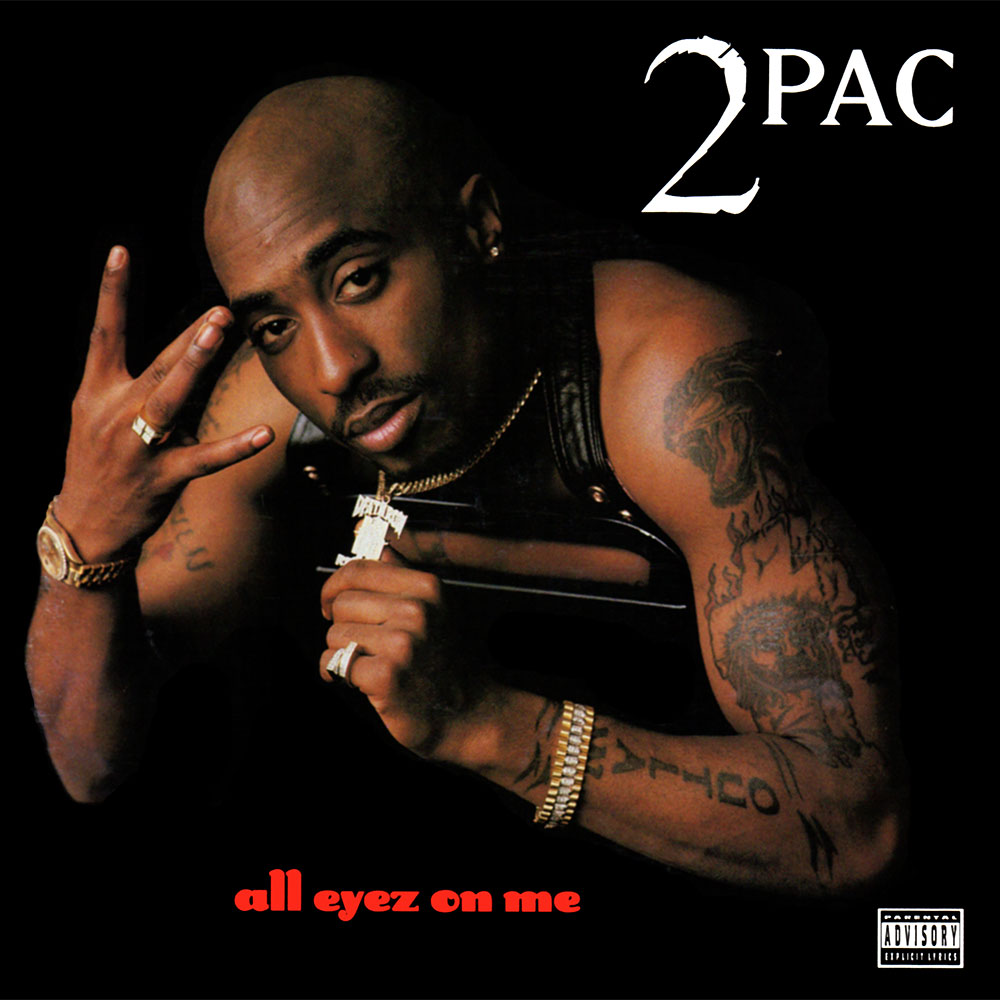
All Eyez on Me is the sound of a man who just got out of prison and has decided he is never going back. Released on February 13, 1996 on Death Row Records — the label that had signed Tupac directly from Rikers Island in a deal brokered by Suge Knight — it was hip-hop's first commercially released double album and remains one of the fastest-selling rap records ever made. Moving over five million copies in its first six months, it was the album that completed Tupac's transformation from conscious political rapper to one of the biggest celebrities on earth. It is louder, brasher, and more extravagant than anything he had made before. It is also undeniably alive in a way that only happens when someone has been through something and come out the other side determined to be impossible to ignore.
Contents
Death Row, Suge Knight and the New Tupac
Track Highlights
The Double Album Question
Production
Legacy
Verdict
FAQs
Death Row, Suge Knight and the New Tupac
The terms of Tupac's release from Rikers Island were extraordinary. Suge Knight paid $1.4 million bail and in return Tupac signed to Death Row Records for a three-album deal. Within eight months of arriving at the label, Tupac recorded over 150 songs. All Eyez on Me was assembled from that avalanche of material and released less than a year after his prison release. The speed and volume of the output reflected both his creative restlessness and a genuine sense that time was running out. Tupac was on bail pending an appeal, entangled in a deepening East Coast-West Coast conflict with Biggie and Bad Boy Records, and moving in an increasingly dangerous orbit. The party-forward energy of much of this record is inseparable from the darkness closing in around it.
Track Highlights
Ambitionz Az a Ridah is one of the great opening statements in rap history — aggressive, cinematic, and dripping with Death Row bass and bravado. It announces immediately that this is a different Tupac from the introspective figure of Me Against the World. California Love, the Dr. Dre collaboration that became one of the best-selling rap singles of the 1990s, is a sun-drenched West Coast anthem that still sounds enormous. How Do U Want It and 2 of Amerikaz Most Wanted — a duet with Snoop Dogg — are party records of the highest order. But the album is not all surface. I Ain't Mad at Cha is a genuinely affecting meditation on friendship and mortality. Life Goes On is a raw eulogy addressed to friends lost to gun violence. Only God Can Judge Me circles back to the introspection of Me Against the World. Even within an album designed to celebrate life at full volume, Tupac cannot help circling back to the question of how much time he has left. In retrospect, these moments hit differently.
The Double Album Question
The honest answer is that 27 tracks is too many. Some of the filler here — particularly across Book 2 — lacks the focus and emotional urgency that defines Tupac's best work. Trimmed to a single album, All Eyez on Me might challenge Me Against the World for the title of his greatest record. As a double album, it is a sprawling, uneven monument that contains some of the best music of his career alongside moments that feel like exactly what they are: a man recording 150 songs and selecting 27 of them without being brutal enough in the edit. The energy and ambition are staggering. The curation is imperfect. Both things are true.
Production
The production is the biggest sonic shift in Tupac's discography. Death Row's stable — Dr. Dre on California Love, DJ Quik, QDIII, Daz Dillinger, and a host of others — bring a polished, bass-heavy G-funk and West Coast gangsta rap sound that represents a significant commercial upgrade from his earlier records. The beats are lush and loud, designed for car speakers and arena sound systems rather than headphones. This was a deliberate commercial escalation and it worked on its own terms. California Love and How Do U Want It became defining sounds of 1996. The production choices reflect the label's priorities but Tupac fits within them without sounding compromised.
Legacy
All Eyez on Me has been certified Diamond in the United States — one of the very few rap albums to reach that milestone, meaning it has sold or streamed the equivalent of ten million copies. It is the album that most casual listeners associate with Tupac, partly because its biggest tracks — California Love, How Do U Want It, 2 of Amerikaz Most Wanted — have never left pop culture rotation. It was also Tupac's final album released during his lifetime. He was shot in Las Vegas on September 7, 1996 — seven months after this record came out — and died six days later. Every listen now carries that weight.
Verdict
All Eyez on Me is a flawed masterpiece. Its best material ranks with anything in hip-hop history, its worst material is filler that a more ruthless edit would have cut. What it undeniably is, though, is the sound of Tupac Shakur at the absolute peak of his fame and ambition, moving at a pace that in hindsight feels less like productivity and more like urgency. He was right to move fast. He knew, on some level, what was coming. The album is a celebration, a party, and underneath all of it, a farewell.
Rating: 9 / 10
FAQs
Was All Eyez on Me the first double album in hip-hop?
All Eyez on Me is widely cited as the first commercially released double album in hip-hop history. Released on February 13, 1996, it featured 27 tracks across two discs and became one of the fastest-selling rap albums of its era.
How did Tupac get out of prison to make this album?
Death Row Records CEO Suge Knight paid $1.4 million bail to secure Tupac's release from Rikers Island in October 1995, in exchange for a three-album record deal. Tupac began recording almost immediately after his release and produced an extraordinary volume of material in under a year.
Is All Eyez on Me better than Me Against the World?
Most critics rank Me Against the World above All Eyez on Me due to its greater consistency and deeper emotional register. However, All Eyez on Me is the more commercially successful and culturally omnipresent record, and its best tracks are as strong as anything Tupac made. It depends on whether you value focus or scale.